
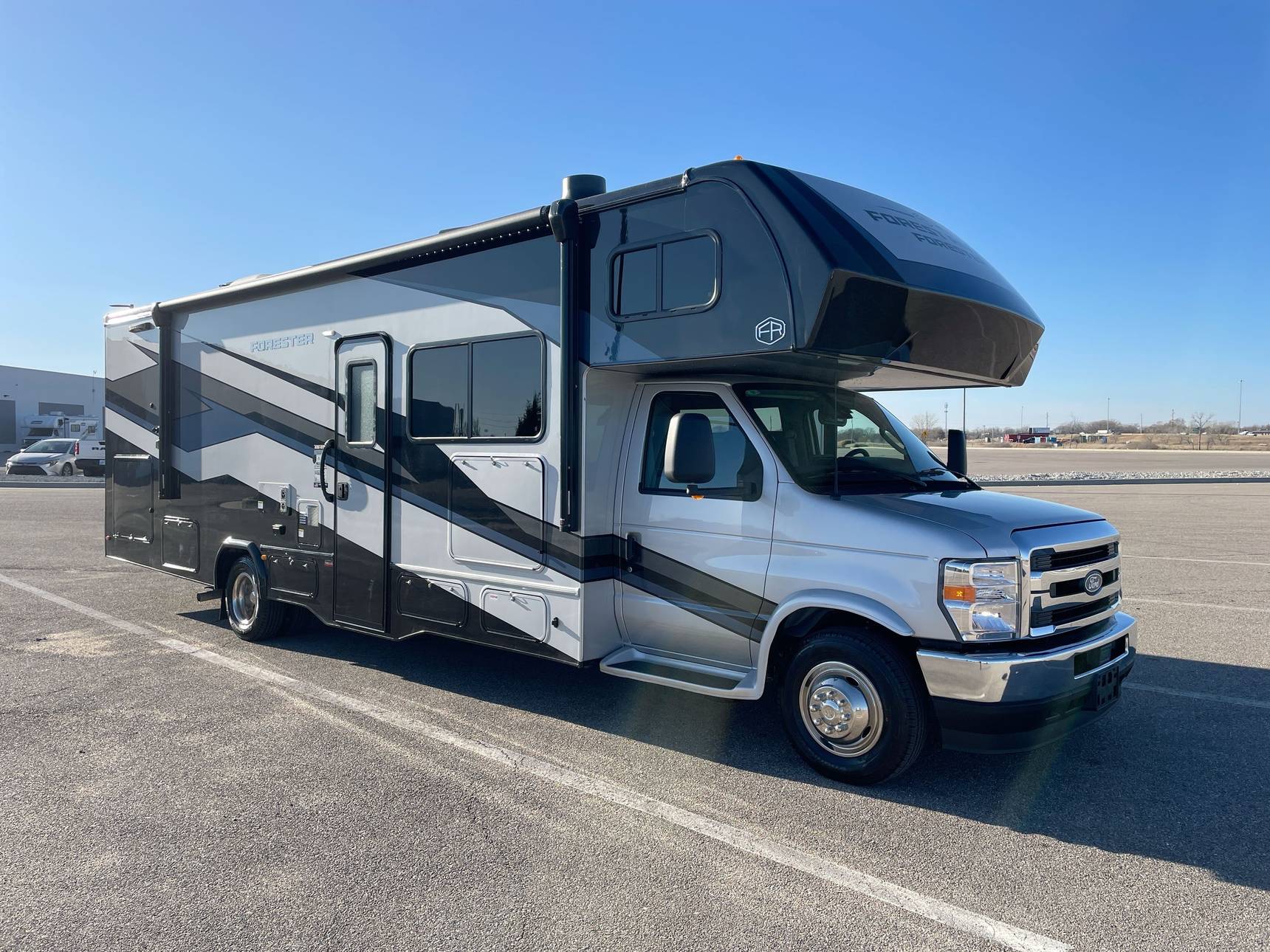
What Is a Class C RV?
A Class C RV is a motorhome built on a truck or van chassis. It’s easy to recognize by the cab-over section above the driver’s cab, which often provides an extra sleeping area or storage. Class C motorhomes come in a range of sizes, making them a popular option for travelers who want many of the comforts of home without driving a full-size bus-style RV.
Features of a Class C Motorhome
Most Class C RVs include a kitchen, bathroom, dining area, and sleeping space. Depending on the model, they may also offer slide-outs, a separate bedroom, an entertainment system, or additional beds. The cab-over area is especially useful for families and groups, as it can provide sleeping space without taking up room elsewhere in the coach.
Layouts and amenities vary, so it’s worth checking the specifications of each model. Consider how many people will travel with you, how much storage you need, and which features will make your trips more comfortable.
Why Choose a Class C RV?
- Convenient design: The motorhome combines the vehicle and living space in one unit.
- Flexible sleeping arrangements: Many floor plans can accommodate couples, families, or small groups.
- Useful amenities: A kitchen and bathroom can make longer trips more convenient.
- Variety of sizes: Class C models range from relatively compact options to larger motorhomes with more living space.
Things to Consider Before You Travel
Before choosing a Class C RV, think about where you plan to go and how you’ll use it. A larger motorhome may offer more room, but it can be harder to maneuver and may not fit in every campground or parking area. Check the vehicle’s length, height, weight limits, fuel requirements, and sleeping capacity. Also make sure the driver is comfortable operating a larger vehicle and understands any licensing rules that apply in the places you’ll visit.
It helps to plan your route in advance, especially when traveling through cities, mountain roads, or areas with low bridges. Confirm campground restrictions and reservations before setting out, and allow extra time for driving and parking.
Is a Class C RV Right for You?
A Class C RV may be a good fit if you want a self-contained motorhome with a practical layout and room for passengers to sleep. Compare floor plans, features, and vehicle dimensions to find an option that suits your travel style. With the right preparation, a Class C motorhome can make road trips, campground stays, and family adventures more comfortable and convenient.
Essential Tips for Safe and Efficient RV Travel
- Check tire pressure before each trip.
- Secure loose items before driving.
- Plan routes around RV height and weight.
- Test brakes, lights, and signals regularly.
- Use wheel chocks when parked.
- Keep fresh water and waste systems clean.
- Carry basic tools and emergency supplies.
Check tire pressure before each trip.
Check the tire pressure on your Class C RV before every trip, including the spare if you have one. Use a reliable gauge and follow the pressure listed by the RV or tire manufacturer, checking when the tires are cold for the most accurate reading. Properly inflated tires can help support safe handling, reduce uneven wear, and lower the risk of tire damage on the road.
Secure loose items before driving.
Before driving your Class C RV, secure loose items throughout the cabin and living area. Put dishes, toiletries, and other belongings in cabinets or storage bins, latch drawers and doors, and stow anything that could slide or fall. This helps prevent damage and distracting noise—and keeps items from becoming hazards if you brake suddenly or make a sharp turn.
Plan routes around RV height and weight.
When traveling in a Class C RV, plan your route around the vehicle’s height and weight—not just the distance. Check for low bridges, tunnels, narrow roads, weight limits, and steep grades, and use an RV-friendly navigation app or route planner to help avoid restrictions. Before you leave, confirm your RV’s actual height and weight, including any roof accessories or cargo, and watch for posted signs along the way. A little planning can help you avoid unsafe roads, unexpected detours, and costly damage.
Test brakes, lights, and signals regularly.
Regularly test your RV’s brakes, lights, and turn signals to help keep every trip safe. Before you hit the road, check that the brake lights, headlights, taillights, and signals work properly, and make sure the brakes respond as expected. Ask someone to confirm the lights from outside, or use a reflective surface when checking them alone. If anything seems faulty, have it repaired before driving.
Use wheel chocks when parked.
When parking your C RV, use wheel chocks to help keep it from rolling, especially on sloped or uneven ground. Once you’ve chosen a safe parking spot, set the parking brake and place the chocks snugly against the tires according to your RV’s manual. Before driving away, remember to remove and store them.
Keep fresh water and waste systems clean.
Keep your Class C RV’s fresh water and waste systems clean to support comfortable, worry-free travel. Sanitize the fresh water tank and lines regularly, use a drinking-water-safe hose, and keep sewer connections and equipment separate from fresh water supplies. Empty and rinse holding tanks at approved dump stations, use RV-safe treatments as directed, and check hoses, fittings, and seals for leaks or buildup. Always follow your RV manufacturer’s instructions for cleaning and maintenance.
Carry basic tools and emergency supplies.
Carry basic tools and emergency supplies whenever you travel in a Class C RV. A tire-pressure gauge, jumper cables, flashlight, multi-tool, duct tape, first-aid kit, warning triangles, and spare fuses can help you handle minor problems and stay safer while waiting for assistance. Store supplies in an easy-to-reach place, check them before each trip, and make sure everyone knows where they are.
Related Posts
Embark on Unprecedented Luxury: Discover the World in Luxury Motorhomes
The Ultimate Luxury: Exploring the World in Luxury Motorhomes The…
Enhance Your RV’s Protection with a Quality Hatch Cover
The Importance of RV Hatch Covers for Your Travel Adventures…
Find Your Adventure: Rent an RV Near Me for Ultimate Travel Freedom
Rent an RV Near Me Experience the Ultimate Adventure: Rent…